Blog

How to Safely Access High Places at Home & Onsite
Understanding the Risks of Working at Height
Accessing high areas such as gutters, ceilings, roofs, or elevated work zones should always be planned carefully. Whether at home or on a work site, working at height carries a higher risk of injury, so it’s important to use suitable access equipment rather than improvised solutions.
Assessing the Task Before You Start
Before starting any task, take a moment to assess what is required. Consider the height you need to reach, how long the work will take, whether you will need both hands, and if tools or materials must be carried. Also check that the ground surface is stable and level. Tasks that require reaching sideways, applying force, or working for extended periods generally need more than a simple ladder.
Using Ladders Safely
Ladders can be used for short, light-duty tasks such as quick inspections or minor adjustments. They should always be placed on firm, level ground and used in accordance with the manufacturer’s instructions. Maintaining three points of contact is essential, and overreaching or standing on the top steps should be avoided. Ladders are designed to provide access, not a stable working platform.
Access Platforms and Podium Steps
For safer and more comfortable working conditions, access platforms such as podium steps or low-level platforms are often a better choice. These provide a larger standing area and built-in guardrails, allowing users to work with both hands while reducing the risk of falls. They are particularly suitable for indoor tasks such as ceiling work, lighting, or general maintenance.
Scissor Lifts for Vertical Access
Scissor lifts are commonly used on construction sites, in warehouses, and in commercial buildings where vertical access is required for longer periods. They offer a stable platform with guardrails and can accommodate tools and materials. Only trained and authorised personnel should operate scissor lifts, and pre-use checks must be carried out. Ground conditions should always be suitable, and site safety rules must be followed.
Mobile Tower Scaffolding
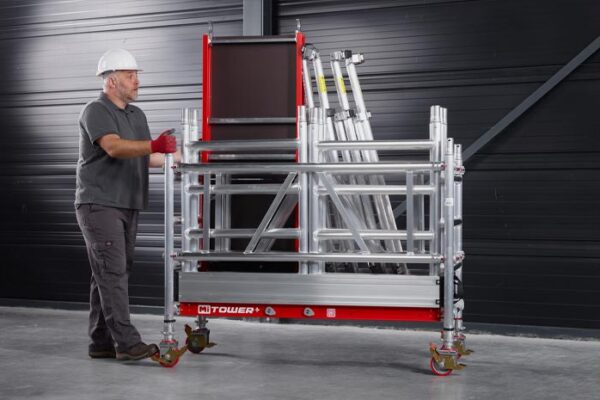
Mobile tower scaffolding is an effective option for tasks such as gutter cleaning, façade work, or repeated activities at the same height. When correctly assembled, it provides a wide and secure working area. Towers must be erected by trained persons, fitted with guardrails and toe boards, and positioned on level ground with wheels locked. They should never be moved while occupied.
Fixed Scaffolding for Larger Projects
For larger or long-term projects, fixed scaffolding may be the most appropriate solution. This type of access must be professionally installed, regularly inspected, and fitted with safe access routes and edge protection. Fixed scaffolding allows multiple workers to operate safely at height over extended periods.
Additional Safety Considerations
Regardless of the access method chosen, additional safety controls, PPE and protective workwear should always be considered. Fall protection systems, such as guardrails or harnesses where required, should be used, and weather conditions must be suitable. Working at height in high winds, rain, or poor visibility significantly increases risk and should be avoided.
Unsafe Practices to Avoid
Improvised methods such as standing on chairs, bins, pallets, or furniture should never be used. Damaged or unstable equipment should be taken out of service immediately. If a task feels unsafe using the equipment available, the safest decision is to stop and reassess the access method.
Choosing the Right Access Method
Selecting the correct access equipment may take additional time to set up, but it greatly reduces the risk of injury and ensures work at height is carried out safely and responsibly.